Why Dealer Websites Get Traffic But No Leads
Traffic is not the same as lead flow. A dealer site can get visits and still lose buyers when the page, form, offer, or follow-up path is unclear.
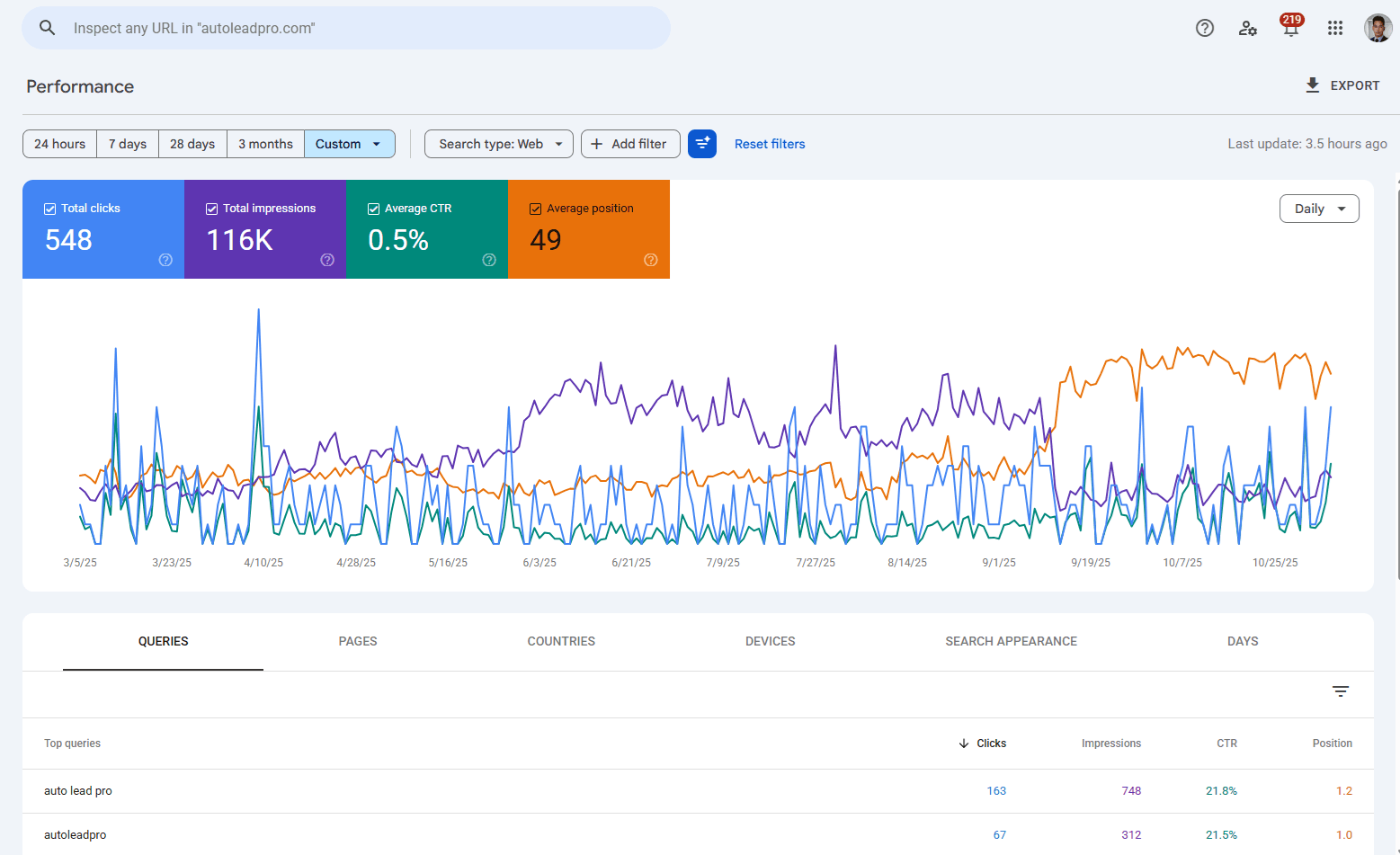
A dealer website can get traffic and still produce very few leads. That sounds strange at first, but it is one of the most common problems in dealership marketing. Search visitors may arrive, read a page, browse inventory, check financing, or compare options, then leave without contacting the business. The issue is not always traffic volume. Often the issue is that the site does not turn buyer intent into a clear next step.
This is why I do not like diagnosing dealer lead problems by rankings alone. A page can rank and still fail. A landing page can look modern and still be confusing. A form can exist and still capture the wrong details. A team can receive inquiries and still lose them because there is no visible follow-up system. The real question is: where does the buyer lose direction or confidence?
Traffic without intent is weak traffic
The first thing to check is whether the traffic matches the business goal. Some visitors are researching. Some are comparing prices. Some want financing. Some want a specific model. Some are looking for service. If all of those visitors land on the same generic page, the site may technically get traffic while failing to serve the intent behind it.
A dealership SEO review should separate informational traffic from commercial traffic. If Google Search Console shows impressions for high-intent queries but the landing page does not answer the question, the page needs work. If traffic lands on a blog post but never reaches inventory, financing, trade-in, or contact paths, the internal link strategy needs work. This is where dealership SEO and conversion work need to happen together.
The page may not answer the buyer's real question
A lot of dealer pages are written like placeholders. They mention cars, financing, service, or inventory, but they do not answer what the buyer actually wants to know. If someone is looking for financing, they want to know whether they can apply, what information is needed, what happens after the form, and how fast someone responds. If someone is looking at inventory, they want availability, price range, vehicle details, next steps, and trust signals.
When a page does not answer those questions, the buyer has to guess. Guessing creates friction. The fix is not stuffing more keywords into the page. The fix is making the page more useful. Explain the offer, the process, the next step, and the reason to trust the business. That kind of content supports human buyers, normal search, and AI visibility.
The call to action may be too vague
A vague button can quietly hurt lead flow. Buttons like submit, learn more, or contact us are not always wrong, but they often fail to match the buyer's intent. A finance page can use a clearer action like request prequalification. A vehicle page can use ask about availability. A trade-in page can use start trade-in review. A service page can use request appointment. The CTA should tell the buyer what is going to happen.
The best CTA is specific enough to reduce uncertainty. If the buyer does not understand the next step, they may hesitate. This is especially important for independent dealers and small lead providers because trust is often built through clarity. A large marketplace can lean on brand familiarity. A smaller operator has to make the path feel personal and clear.
The form may capture too little context
A form can be too long, but it can also be too thin. If a dealer lead form only captures name, email, and a short message, the team may not know what the buyer wanted. That creates weak follow-up. The salesperson has to ask basic questions that the form could have captured. The buyer may cool off before anyone gets enough context.
Useful lead capture depends on the intent. A vehicle inquiry should preserve the vehicle or category. A finance inquiry should capture enough information to start the conversation. A trade-in form should ask for vehicle details. A lead-provider inquiry should capture source, lead type, and routing needs. If your current form does not preserve that context, the dealer lead generation path is probably leaking.
Follow-up may be invisible
Sometimes the website does its job and the lead still gets lost. This happens when submissions go to an inbox with no status, owner, reminder, or dashboard. The team may not know who responded, what was said, or which leads still need action. More traffic will not fix that problem. More traffic can actually make it harder to manage.
Two 2025 industry studies quantify this exact failure. DAS Technology's NADA 2025 mystery-shop study (1,700 dealership inquiries, Q3-Q4 2024) found that even when dealers responded, 74% offered no price quote and 91% excluded payment details - fast responses that answer nothing. And Foureyes' 2025 benchmarks found 65% of leads who returned to a dealer's website after submitting heard nothing within 24 hours of the return visit. The traffic did its job; the response layer dropped it.
A small CRM-style workflow can solve a lot of this without becoming complicated. The lead should create a record, preserve source and intent, notify the right person, and move through statuses such as new, contacted, waiting, appointment set, sold, lost, or needs review. If that workflow does not exist yet, a focused CRM lead funnel can be more valuable than another ad campaign.
Marketplace leads do not fix owned-site problems
CarGurus, CarsDirect, and other large automotive platforms can support visibility and lead supply. AutoLeadPro-style systems can support distribution and lead operations at scale. Those tools can be useful, but they solve a different problem. They do not automatically fix your owned website's page intent, CTAs, form fields, routing, internal links, or follow-up dashboard.
That difference matters for independent dealers. If the website has traffic but no leads, the answer is not always another source of traffic. The answer may be a custom review of the owned funnel: which page attracts the visitor, what question the visitor has, what action the page asks for, what the form captures, and what happens after submission.
What I would check first
- Google Search Console pages with impressions but weak clicks.
- High-traffic pages with unclear CTAs or weak lead paths.
- Forms that do not preserve buyer intent, source, or next action.
- Pages that answer broad topics but do not link naturally to revenue pages.
- Lead notifications that arrive without owner, status, or follow-up visibility.
- Missing proof that would help a buyer trust the dealership before submitting.
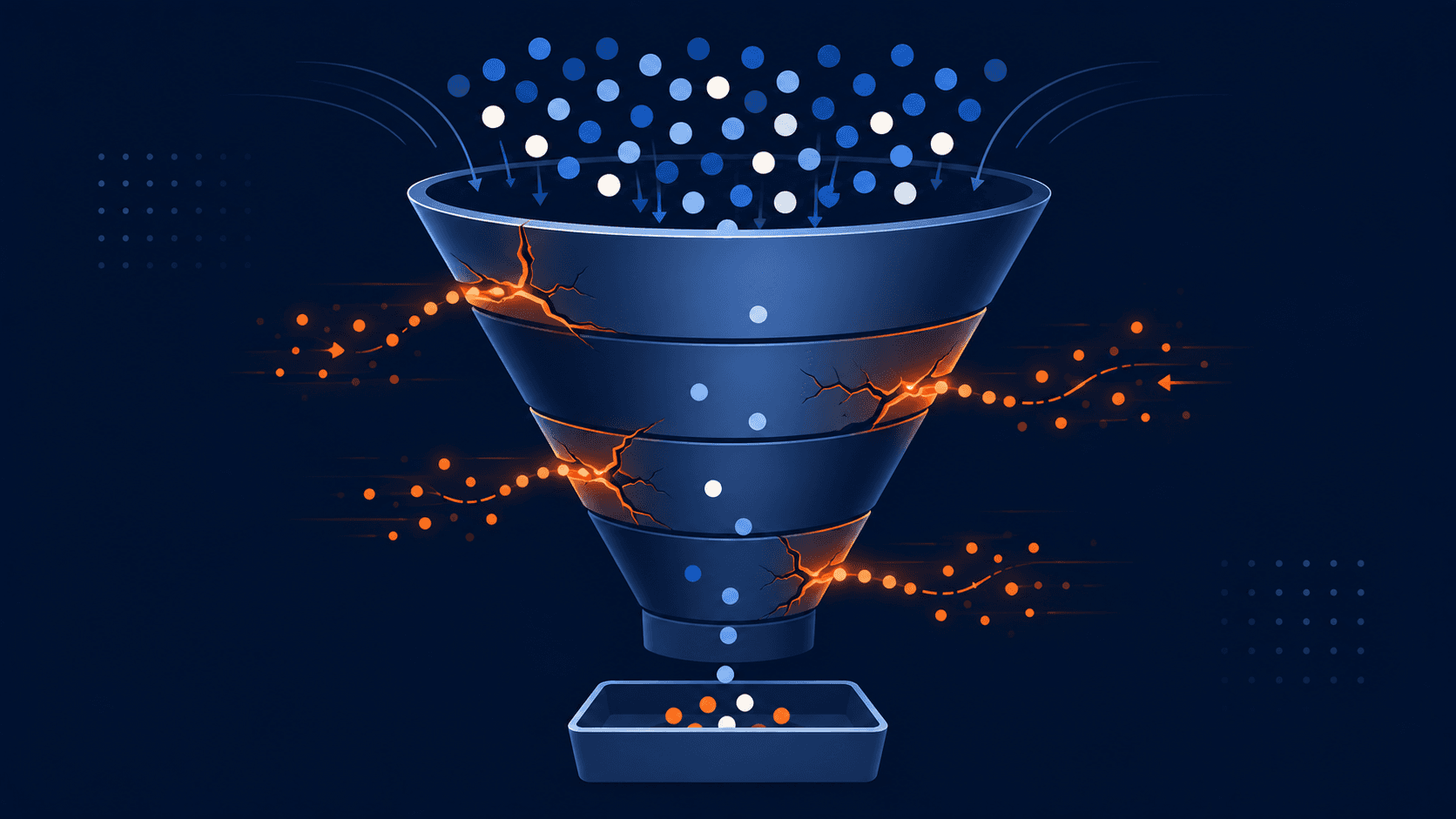
The best fix depends on where the break appears. If search queries are weak, start with SEO. If the right visitors arrive but do not act, improve the landing page and CTA. If forms are submitted but follow-up is messy, build the workflow. If all three are weak, map the full system instead of fixing one page in isolation.
If your dealer site gets visits but not enough useful leads, the next step is a practical dealer growth audit that reviews SEO, page intent, forms, routing, and follow-up together.
FAQ
Usually the lead path, not the traffic: pages that do not answer the buyer's actual question, vague calls to action, forms that capture no context, and invisible follow-up. Foureyes' 2025 benchmarks show 43.2% of dealer website leads get mishandled even after arriving.
Check follow-up first. DAS Technology's NADA 2025 study found most dealer responses lack substance (74% no price quote, 91% no payment details), and Foureyes measured 65% of returning website leads hearing nothing within 24 hours - process failures that make good leads look bad.
One that names the outcome: request availability, get prequalified, start trade-in review, request appointment. Generic buttons like submit or learn more make the buyer guess what happens next.
Google Search Console for pages with impressions but weak clicks, then high-traffic pages with unclear CTAs, then forms that lose source and intent, then response speed and substance. Fix the break you find before buying more traffic.
Sources
- DAS Technology Automotive Lead Response Study (NADA 2025) - Unveiled January 2025 at NADA in New Orleans. Mystery-shop study of 1,700 lead inquiries via dealership vehicle detail pages, Q3-Q4 2024.
- Foureyes 2025 Automotive Dealer Industry Benchmarks Report - Released March 2025. Analysis of 1.1 billion dealer website visits across 22,500 dealership websites, calendar year 2024.