What Should Happen After a Dealer Lead Fills Out a Form?
The form is not the system. A useful dealer lead flow captures context, routes the inquiry, and makes follow-up visible.
A dealer lead form is only the front door. The real value of dealer lead generation comes from what happens after the buyer submits it. If the form sends a plain email with no context, no routing, no dashboard, and no follow-up process, the dealership may still lose the opportunity. A better lead capture flow treats the form submission as the start of a workflow, not the finish line.
Dealer lead generation is more than getting the form filled out
A lot of websites treat lead generation as a design problem: add a landing page, add a form, add a button, then wait. That is only part of the system. A dealership or auto lead provider also needs to know where the lead came from, what the person wanted, who should handle it, what message should go out, and how the lead will be tracked until someone follows up.
The search intent behind this topic is practical. People asking about dealer lead generation usually want more leads, better-quality leads, or fewer missed leads. The answer is not always more traffic. Sometimes the problem is that traffic is already arriving, but the capture and follow-up flow is too weak to turn that interest into a real sales conversation. That is where a focused dealer lead generation system becomes more useful than another generic contact form.
Buying leads is not the same as owning the lead workflow
Lead vendors, marketplaces, and inventory platforms can be useful when the goal is exposure or volume. A CarGurus-style marketplace can help buyers discover listings. A CarsDirect-style lead source can support distribution. An AutoLeadPro-style provider can help with lead supply at scale. But those solutions do not automatically organize what happens inside a smaller dealership after the inquiry arrives.
That distinction matters. A dealer can buy more leads and still lose opportunities if the team does not know where each lead came from, what the buyer wanted, who owns the follow-up, or what happened after the first response. Jerome SEO Works is positioned for the custom side of that problem: the landing page, the form, the routing, the dashboard, and the follow-up flow that a scale-first platform will not build around one dealer's exact process.
For an independent dealer or small lead provider, the best first question is not always "where can we get more leads?" Sometimes it is "can our current process handle the leads we already get?" If the answer is no, more volume can make the mess bigger.
The scale of the handling problem is measured annually: Foureyes' 2025 Automotive Dealer Industry Benchmarks Report - 1.1 billion dealer website visits across 22,500 dealership websites in calendar year 2024 - found 43.2% of website leads mishandled, broken down as 47.7% of website phone calls, 42.2% of form fills, and 35.5% of chats. And 14.1% of leads never reached a CRM at all. More volume into that pipeline just leaks faster.
The lead should carry useful context
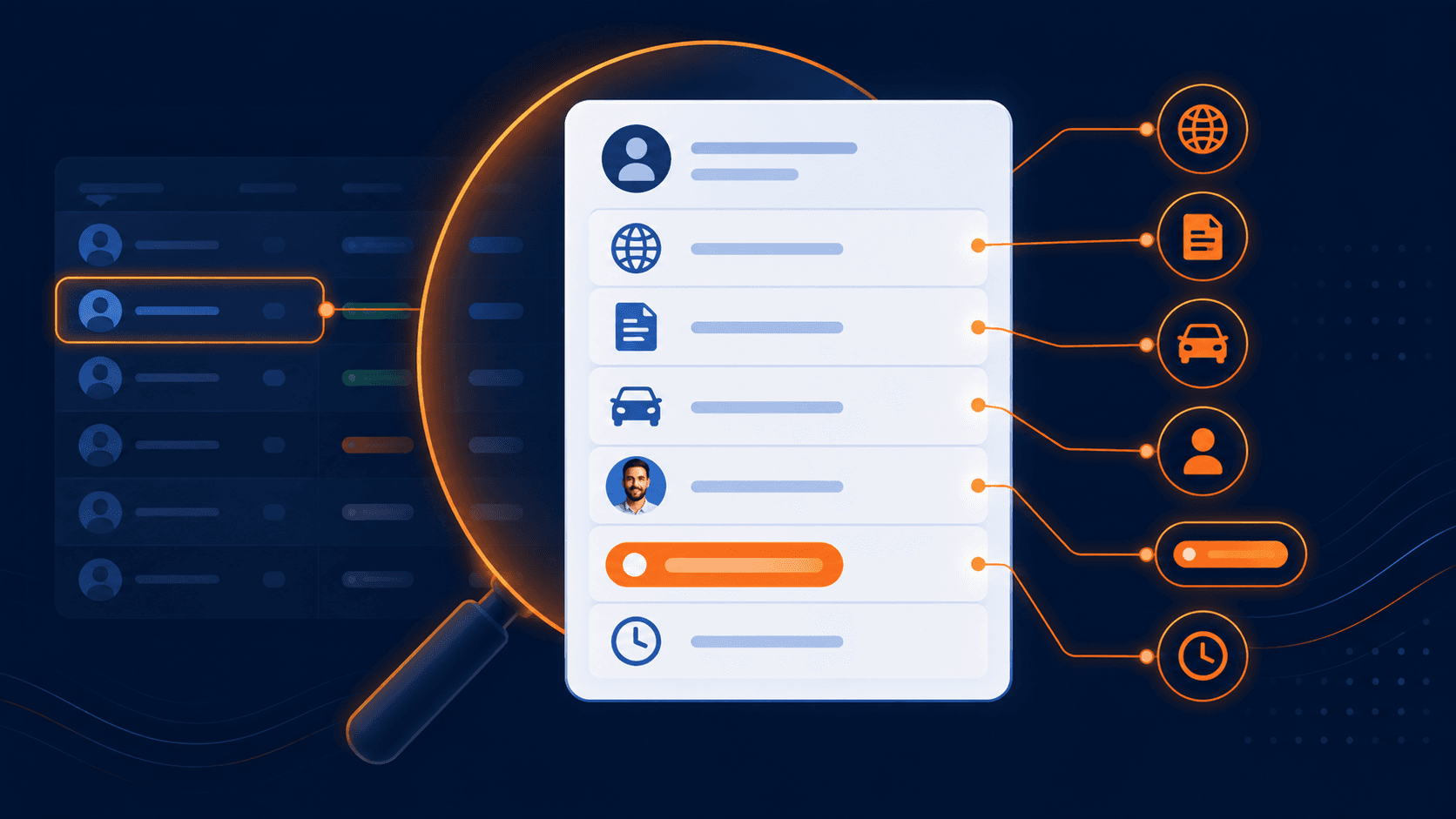
At minimum, the lead should preserve the source, page, campaign, vehicle interest, contact details, timestamp, and next action. Without that context, sales follow-up becomes slower and less specific. A buyer who asks about financing should not be treated the same as a buyer asking about a specific truck. A trade-in inquiry should not land in the same vague bucket as a general contact form.
A stronger dealer lead record should answer basic operational questions without forcing the sales team to dig. What page did the buyer use? Was it an SEO visit, ad campaign, referral, partner source, or direct visit? Did the buyer ask about a vehicle, financing, trade-in, service, or general availability? What response should happen first? If the record does not answer those questions, the follow-up starts with guesswork.
- Source: organic search, paid campaign, referral, directory, partner, or direct visit.
- Page: the landing page, inventory page, finance page, trade-in page, service page, or contact page that created the lead.
- Intent: vehicle inquiry, financing, trade-in, appointment, partner lead, or general question.
- Owner: the person or team responsible for the next action.
- Status: new, contacted, waiting, appointment set, sold, lost, or needs review.
Route by intent
- Vehicle inquiry leads need model, budget, and availability context.
- Finance leads need credit, approval, or payment-plan context.
- Trade-in leads need vehicle details and ownership context.
- Partner or lead-provider traffic needs routing and delivery visibility.
Routing by intent makes the follow-up more relevant. Vehicle inquiries may need sales team review. Finance leads may need prequalification steps. Trade-in leads may need vehicle details checked. Partner leads may need ping-post or distribution logic. The system does not need to be complicated at first, but it does need to match the way the business actually handles leads.
Not every lead should go to the same place. If all inquiries land in one inbox, the team has to manually decide what matters, who should respond, and what context is missing. That is where delays happen. Routing can be simple at first: finance leads go to one recipient, vehicle inquiries go to another, trade-in forms include vehicle details, and partner leads get tagged for review. The point is to remove obvious friction.
This is also where a CRM lead funnel becomes useful. The funnel does not need to be huge. It can start as a table, dashboard, or task pipeline that shows which leads are new, which were contacted, which need follow-up, and which are stuck.
The landing page should reduce friction
A good dealer landing page should make the next action obvious. The headline should match the traffic source. The page should explain what the buyer gets by submitting the form. The form should ask for enough information to make follow-up useful, but not so much that the buyer gives up. The button should describe the action clearly: request availability, get prequalified, value my trade, schedule service, or talk to the team.
This is where web development and SEO meet. If SEO brings visitors to the page but the landing page does not guide them, the opportunity leaks. If the page looks good but cannot be found or internally linked, it depends too much on paid traffic. Jerome SEO Works is built around combining both sides: search visibility first, then the systems that make marketing work.
A landing page should also set expectations after the form. If the buyer submits a finance request, do they know what information may be needed next? If they request availability, do they know someone will follow up? If they send a trade-in request, do they know what vehicle details matter? This small bit of clarity can improve both lead quality and buyer confidence.
The form should send data to the right place
A lead form should not only send an email. It can create a database record, trigger a notification, send a confirmation email, update a dashboard, tag the lead source, or pass the lead into another system. The right setup depends on the dealership's tools. Some teams need a simple form and spreadsheet. Others need Supabase, API integrations, webhook logic, email automation, or CRM lead funnels that keep the follow-up visible.
The main point is visibility. If a lead disappears into an inbox, it is easy to miss. If it becomes a record with source, status, notes, and next action, the team can manage it. Even a small CRM-style dashboard can create a big improvement because the business can see what came in, what was handled, and what still needs attention.
Start with simple automation before complex integrations
Automation does not need to start with a giant CRM migration. The first useful automations are usually simple: send the owner a notification, send the buyer a confirmation email, save the submission into a table, tag the service or lead type, and show the lead in a dashboard. Jerome SEO Works's own contact flow now follows that pattern with a form submission, owner email, visitor auto-reply, Supabase storage, and a thank-you page.
That kind of workflow proves the concept before adding heavier features. Once the basics work, the system can grow into reminders, lead stages, API integrations, webhook routing, email nurture, client portals, or reporting dashboards. The safest path is to automate the obvious friction first and avoid building tools nobody uses.
Make follow-up visible
A simple dashboard, task stage, email notification, or CRM-style record can prevent leads from disappearing into an inbox. The system does not need to be huge; it needs to match the dealership workflow. For example, a lead pipeline could have stages like new lead, contacted, waiting for buyer, appointment set, sold, lost, or needs review. That alone gives the team more control than a disconnected form.
Follow-up also needs timing. A lead that waits too long can cool off. The workflow can support faster action with email alerts, task reminders, simple nurturing, or text-message direction if the business has the right consent and tooling. The goal is not automation for its own sake. The goal is to make the next step easier for the person responsible for the lead.
Measure the flow after launch
Dealer lead generation should be reviewed after it goes live. Useful questions include: which pages are producing leads, which traffic sources are working, which forms get started but not submitted, which lead types need better routing, and which follow-up steps are slow? This is where reports, dashboards, and analytics become useful. They show where the system is working and where it needs adjustment.
For organic search traffic, Google Search Console can show which pages and queries are bringing people in. For site behavior, GA4 can help review engagement and conversions. For workflow visibility, the CRM or internal dashboard can show whether leads were handled. The strongest setup connects all three views: acquisition, page behavior, and follow-up operations.
This is why dealer lead generation should stay connected to dealership SEO. SEO can create demand, but the lead system needs to preserve the value of that demand after the visitor submits. If the page ranks but the lead record is weak, the business still loses context.
What to fix before asking for more traffic
Before spending more on traffic, map the lead path from page visit to first response. If the form does not preserve source, intent, and next action, the campaign is already leaking. The dealer lead generation page explains how I approach that full capture, routing, and follow-up path.
The best next step is to map the current lead flow. Where does the lead come from? What form does it use? Where does it go? Who sees it? What happens if nobody responds? What data is missing? Once those answers are clear, the system can be improved with a focused landing page, better form structure, routing logic, dashboard visibility, and follow-up reminders.
For a small dealer or lead provider, this map is often more valuable than adding another tool immediately. It shows whether the problem is the page, the form, the routing, the response speed, the dashboard, or the offer itself. Once the break is visible, the fix can be smaller and more accurate.
More traffic is useful only when the lead path can handle it. If your team needs a practical workflow after the form, the next layer is usually a lightweight CRM lead funnel rather than a bigger ad budget.
FAQ
Five things, automatically: a record is created with source and intent preserved, the right person is notified, the buyer gets a confirmation with a stated next step, the lead gets an owner, and it enters a visible status pipeline.
43.2%, per Foureyes' 2025 Automotive Dealer Industry Benchmarks Report (1.1 billion website visits, 22,500 dealerships, calendar year 2024) - including 47.7% of website calls and 42.2% of form fills, with 14.1% of leads never reaching a CRM.
Source (organic, paid, referral, partner), the page that produced it, buyer intent (vehicle, finance, trade-in, service), timestamp, owner, and status. Without those, every follow-up starts with guesswork.
Yes - SEO creates the demand and the capture flow preserves its value. A page that ranks feeding a form that loses context wastes the ranking; the two systems only pay off connected.
Sources
- Foureyes 2025 Automotive Dealer Industry Benchmarks Report - Released March 2025. Analysis of 1.1 billion dealer website visits across 22,500 dealership websites, calendar year 2024.