Dealer Landing Pages That Convert Search Traffic Into Leads
A landing page has one job: continue the promise the buyer clicked on. Most dealer pages break that promise in the first screen.
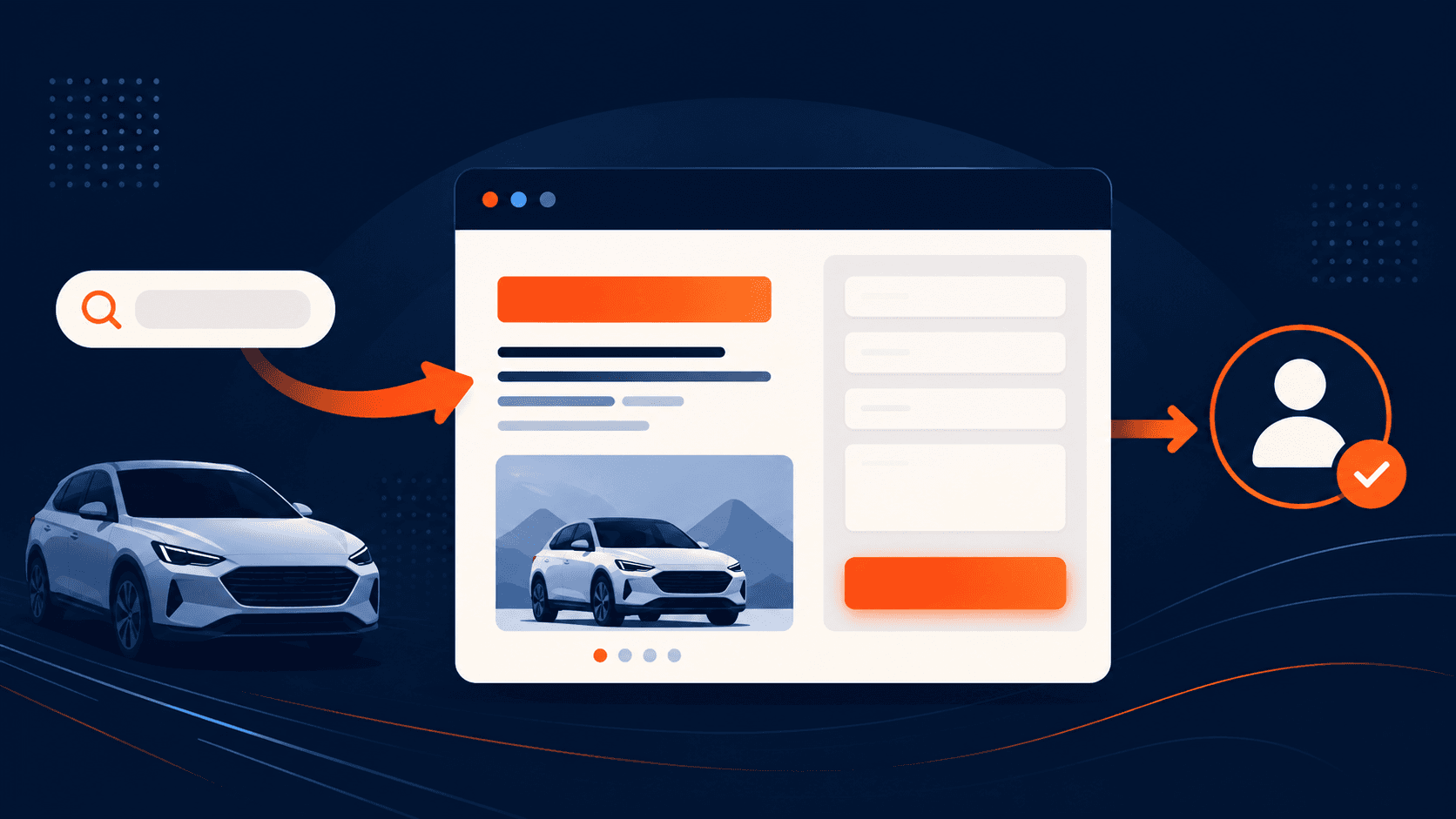
A landing page is a continuation of a promise. The buyer searched something specific, clicked a result that claimed to answer it, and landed on your page. Conversion happens when the page keeps that promise fast. Most dealer landing pages break it instead - generic headline, wall of options, a form that asks nothing useful, and no reason to trust the store behind it.
Match the headline to the query, not the brand
If the buyer searched "used trucks with financing," the headline should say used trucks and financing - not "Welcome to Smith Auto Group, serving the community since 1987." Brand pride belongs further down the page. The first screen exists to confirm the buyer is in the right place, and you have a few seconds to do it.
One page, one job
Pages that try to serve every intent convert none of them well. A financing page should not also pitch service specials and a tire sale. Pick the single action that matches the traffic - request availability, get prequalified, value my trade - and remove everything that competes with it. Navigation can slim down on true campaign pages; every extra exit is a leak.
Forms should qualify, not interrogate
- Ask what makes follow-up useful: vehicle of interest, timeline, contact preference.
- Skip what you do not need yet - SSNs, full addresses, and ten dropdowns kill completion.
- Label the button with the outcome: "Check availability" beats "Submit."
- Say what happens next, right under the button. Uncertainty is friction.
The form is also where lead quality is decided. A name-and-email form produces anonymous leads the sales team cannot prioritize. Two extra intent fields turn the same inquiry into something a salesperson can open a real conversation with - the difference is explained in detail in what should happen after a dealer lead fills out a form.
Trust elements dealers keep skipping
Real photos of the lot beat stock photography every time. Actual review snippets with names, a visible address and phone number, and honest financing language ("approval depends on credit - here is the process") all raise conversion because car buying is a high-distrust purchase. The page that acknowledges that wins.
The page is only half the system
A converting page feeding a broken follow-up process just creates disappointed buyers faster. The submission needs to land somewhere visible - owner notification, a record with source and intent, and a fast first response. If traffic is arriving but leads are not, work through why dealer websites get traffic but no leads before buying more clicks.
If your campaign pages get visits but the phone stays quiet, the page and the form are the first suspects. A landing page review is a cheaper fix than a bigger ad budget.