Local SEO for Car Dealerships: What Actually Moves the Map Pack
Most car buyers search with local intent. The map pack rewards a clean Google Business Profile, honest location pages, and consistency - not tricks.
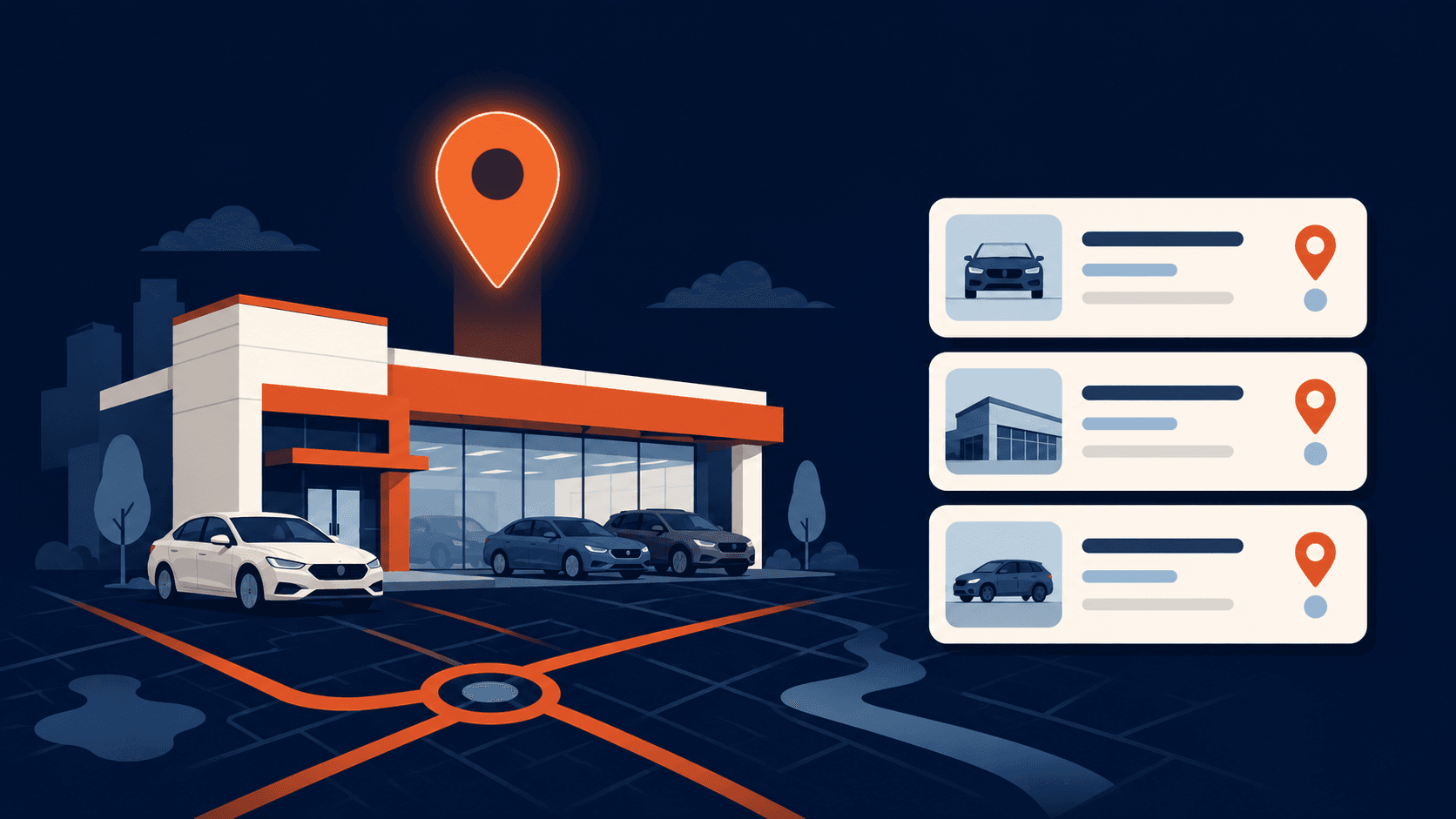
Almost every high-intent dealership search carries local intent, whether the buyer types it or not. "Used trucks near me," "dealerships in [city]," "bad credit car lots [city]" - Google resolves all of these locally, and the map pack sits above most organic results. If your dealership is invisible there, you are handing those buyers to whoever shows up instead.
Your Google Business Profile is a second homepage
Treat the Google Business Profile like a landing page, because for many buyers it is the only page they see before calling. The basics matter more than the hacks: the correct primary category (Car Dealer, Used Car Dealer), accurate hours, real photos of the lot and showroom, a working link to inventory, and services listed the way buyers phrase them. An abandoned profile with three photos from 2019 reads exactly how it looks.
Reviews are the other half. You do not need a fake five-star wall - you need volume, recency, and responses. A dealership that answers its critical reviews calmly looks more trustworthy than one with suspicious perfection. Review keywords also feed relevance: when buyers mention financing or trade-ins in reviews, that language supports the queries you want.
NAP consistency is boring and it still matters
Name, address, phone - identical everywhere. Your site footer, GBP, Facebook, directories, and any lead platform listing should agree exactly. Mismatched addresses and old tracking numbers split your entity signals and quietly erode local trust. This is one of the first checks in a local SEO audit because it is cheap to fix and compounds everything else.
Location pages: one per real location, written for buyers
- One page per physical location - not one page per city you wish you ranked in.
- Real signals on the page: address, embedded map, hours, staff, local inventory highlights, directions landmarks.
- Local proof: reviews from that store, photos of that lot - not stock imagery.
- Clear next actions: view inventory, get financing, value a trade, call that store.
Doorway-style city pages - ten near-identical pages swapping the city name - are the local version of keyword stuffing. They rarely rank, and when they do, they convert poorly because buyers can tell there is no dealership behind them.
How to measure local visibility honestly
Google Search Console will show you queries containing your city, "near me" patterns, and which pages earn those impressions. GBP insights show calls, direction requests, and website clicks. Together they answer the practical question: are more local buyers finding and contacting the dealership? That is the same measurement discipline behind the Tijuana Dentist Center case study, where organic search became the top acquisition channel for a local business - proven in GA4, not claimed.
If your dealership is losing the map pack to weaker competitors, the gap is usually profile hygiene and location-page quality - both fixable. Start with a local visibility audit.